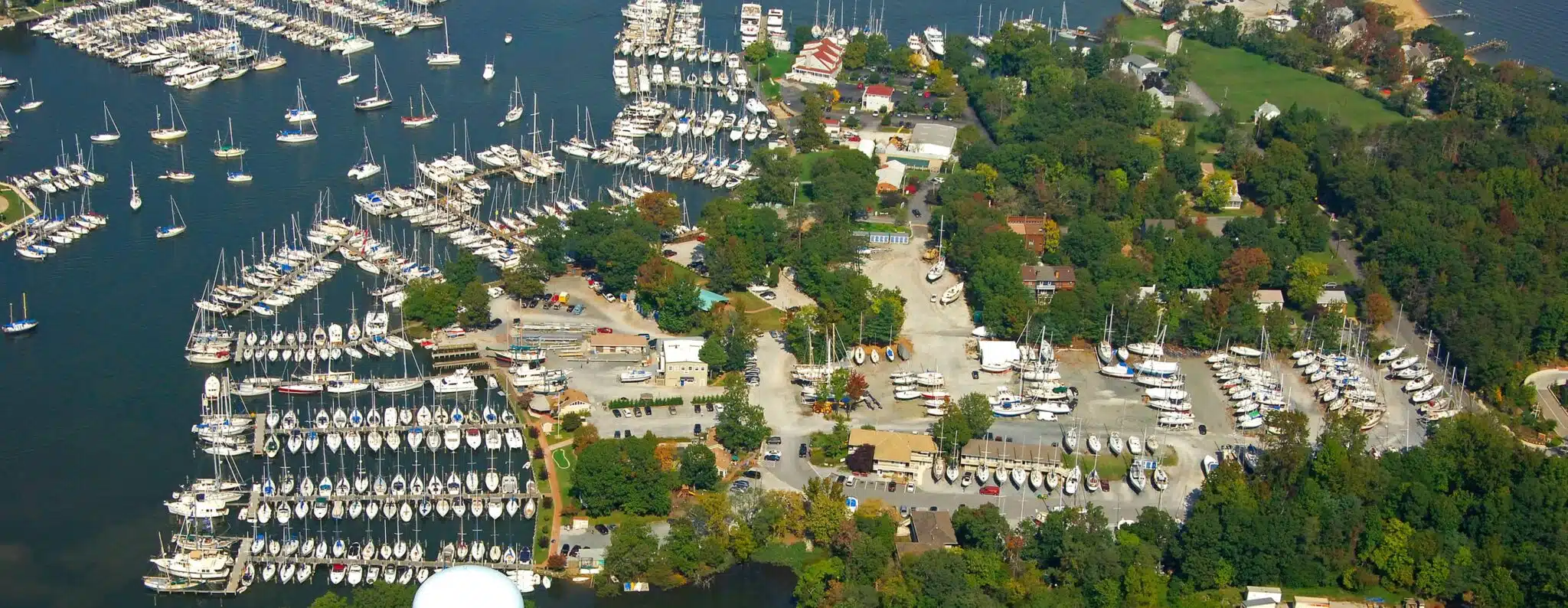
Two closings, one clear message: Annapolis is strategic water
If you want a read on where marina capital thinks demand will hold up, follow the dock gates—not the headlines. Safe Harbor’s back-to-back Annapolis closings are a classic “cluster strategy”: buy multiple properties in the same boating hub to create operational density (shared marketing, labor, vendor relationships, storage/service overflow, and a stronger membership value proposition).
Local reporting and industry coverage pegged the closings as:
Eastport Yacht Center: closed Nov. 4, 2025
Port Annapolis: closed Nov. 11, 2025, becoming Safe Harbor’s 151st property globally at the time
This all lands after Safe Harbor’s ownership change earlier in 2025, when funds managed by Blackstone Infrastructure completed their acquisition of Safe Harbor Marinas.
What Safe Harbor actually bought: capacity + capability
Port Annapolis brings the kind of scale that matters in a slip-constrained city. The marina markets “over 250 slips” and has expanded facilities including a 3,000 sq. ft. pavilion.
Meanwhile, Eastport Yacht Center is smaller in slip count but heavy on service utility—listed by multiple marina directories at ~106 slips and featuring a 35-ton travel lift, plus storage options and contractor access on-site.
Quick comparison (responsive table)
| Property (post-close branding) | Approx. size | Notable facilities & services | Close timing | Why it matters in Annapolis |
|---|---|---|---|---|
| Port Annapolis (Safe Harbor Port Annapolis) | ~250+ wet slips | Large slip inventory; facility upgrades; event pavilion (3,000 sq. ft.); marketed as a full-service destination marina | Closed Nov. 11, 2025 | Scale: one of the larger operations in the area, adding meaningful dockage in a supply-tight market |
| Eastport Yacht Center (Safe Harbor Eastport Yacht Center) | ~106 total slips | Wet + transient slips, dry/winter storage; on-site service focus; 35-ton lift capability (listed); strong “downtown-adjacent” utility | Closed Nov. 4, 2025 | Service + location: complements big-slip inventory with a practical, high-turn yard and storage footprint |
The Chesapeake Bay “platform play” is accelerating
Safe Harbor’s Annapolis buys weren’t happening in a vacuum. Around the same window, other institutional operators were planting flags nearby:
Bain Capital + BlueWater Marinas announced the acquisition of Kent Narrows Boatel, a heated drystack facility just outside Annapolis, calling it the fourth marina in that portfolio (timed to Oct. 3, 2025 in Bain’s release).
Stella Marinas (with Drake Real Estate Partners) acquired South River Marina and Turkey Point Marina & Yacht Club in Edgewater, Maryland, creating a combined destination marketed at 500+ slips and racks.
Put simply: capital is treating the upper Bay like a durable boating corridor—supported by dense population, strong cruising grounds, and limited developable waterfront.
What boaters will likely notice first
While deal terms weren’t broadly published in the sources above, operational signals showed up quickly—most visibly through tenant movement and “one-stop” positioning.
For example, Bluewater Yacht Sales publicized plans to relocate to Port Annapolis following Safe Harbor’s acquisition, citing the larger footprint, added storage/service capability, and the benefits of common ownership across marina and service lines.
For customers, that typically translates into some mix of: more standardized dockage systems and concierge-style services, capital improvements (shore power, bathhouses, docks, yard equipment), and tighter integration between slips, storage, and service scheduling.
Bottom line
Annapolis isn’t just a trophy market—it’s an operating market. By pairing a large slip base (Port Annapolis) with a service-forward, downtown-adjacent property (Eastport Yacht Center), Safe Harbor strengthens its Chesapeake footprint at the exact moment rival platforms are also scaling in Maryland.
If you run a marina nearby, the competitive bar likely rises (amenities, service turnaround, marketing). If you’re a boater, expect more “network benefits”—and a continued premium on well-run, well-located dockage.