Quick answers
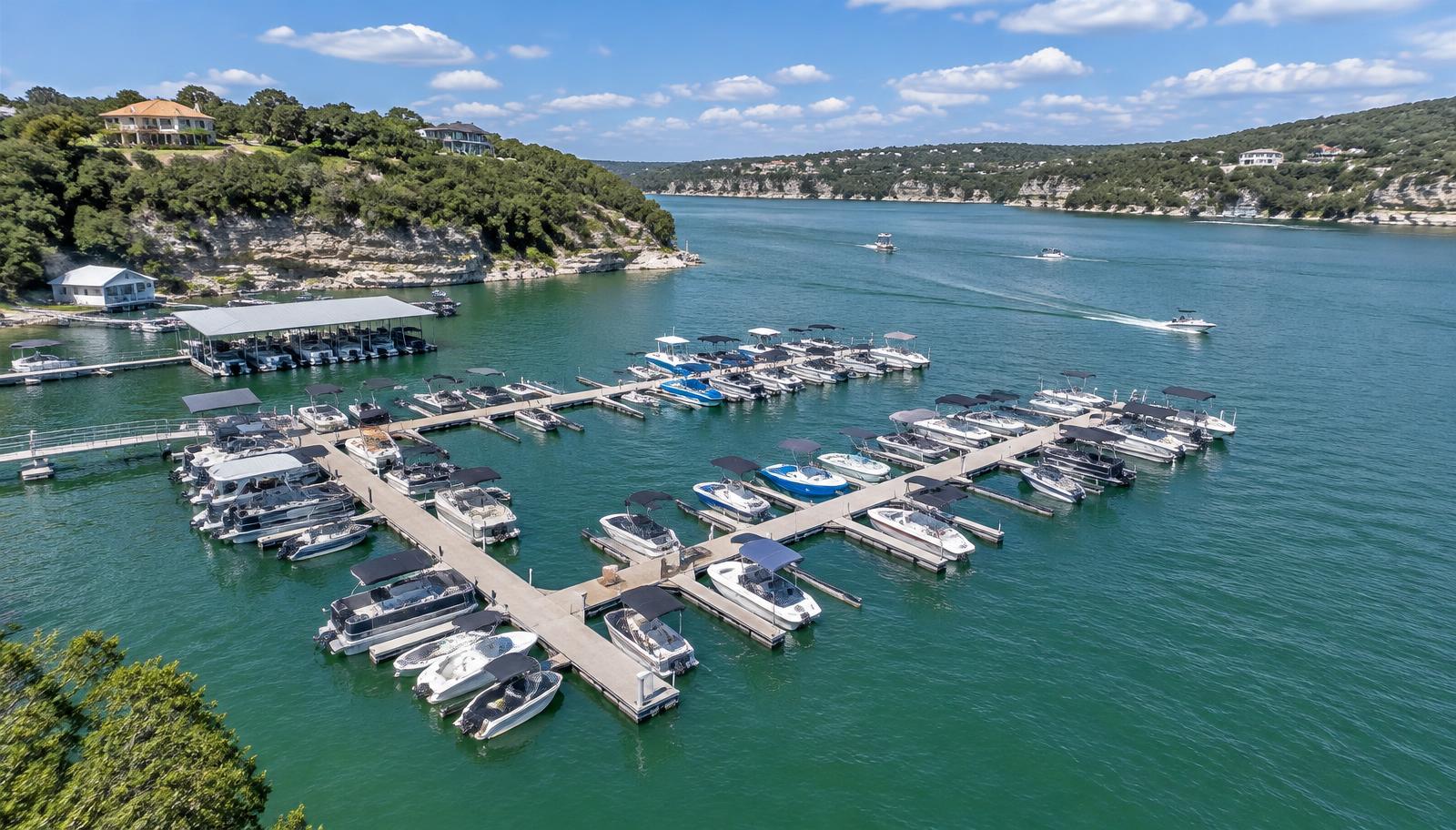
Most Lake Travis marinas rent covered wet slips, many with boat lifts, on monthly or annual contracts. Slips are sized by length and width, so your boat's beam and air draft matter as much as its length. Because the lake's level fluctuates widely, the best marinas are the ones that keep deep water and reliable access in low-water years.
- Cost: covered Lake Travis slips are priced by slip size, and a lift or larger slip adds meaningfully to the monthly rate. Always get written quotes.
- Timing: popular marinas run waitlists for larger covered slips, so start 3 to 6 months ahead, or sooner for 30 feet and up.
- Pitfall: water levels swing between drought and flood years. Ask how the marina relocates docks and how far your walk gets at low water.
How Lake Travis slips are different
Lake Travis is a reservoir on the Colorado River, and its level can move dramatically between drought and flood years. Marinas respond by moving docks, extending walkways or shifting to deeper coves. That makes a marina's water-level track record one of the most important things to check, and something you rarely see on a rate sheet.
Nearly all slips are covered, protecting boats from Central Texas sun and hail. Slips are usually sold by dimensions, such as 12 by 28 feet, with weight limits when a lift is included.
Main basin vs. upper lake
Marinas on the lower lake, near Lakeway, Hudson Bend and the Mansfield Dam area, are closest to Austin and the busiest party coves. Mid-lake and upper-lake marinas, such as those around Cat Hollow and Mile Marker 26, tend to offer calmer, protected coves and easier parking, at the cost of a longer drive. Your choice depends on how far you are willing to drive and how you use the boat.
What to ask a Lake Travis marina
Ask what happens to your slip if the lake drops 20 or 30 feet, whether the marina has relocated docks before, and how parking and walkway access change. Confirm the slip's dimensions, maximum beam, lift capacity and roof height for towers or T-tops. Ask about security, fuel, pump-out, and whether outside detailers or mechanics are allowed.
Finally, ask about the waitlist: how many names are ahead of you for your slip size, and whether a smaller or less central slip is available now as a bridge.
Secure a slip before spring
Demand peaks from March through Labor Day, so openings in late fall and winter are your best chance. Have your boat specs, registration and insurance ready to send immediately.
SeasonalSlips lists Lake Travis marinas with covered and lift slips. Browse availability or use our free concierge to request openings from several marinas at once.
Frequently asked questions
Are Lake Travis boat slips covered?
Most are. Covered slips are standard on Lake Travis because of sun and hail.
What happens to my slip when Lake Travis is low?
Marinas may relocate or extend docks. Ask each marina how it handled past low-water years.
Is there a waitlist for Lake Travis slips?
Many popular marinas have waitlists, especially for larger covered slips.
Browse Lake Travis slips
Compare annual, seasonal and long-term slips, then request availability from multiple marinas in one step. Prefer a hand? Our free concierge will contact marinas for you.
Sources
Rates change often. Always confirm current pricing and terms directly with each marina.