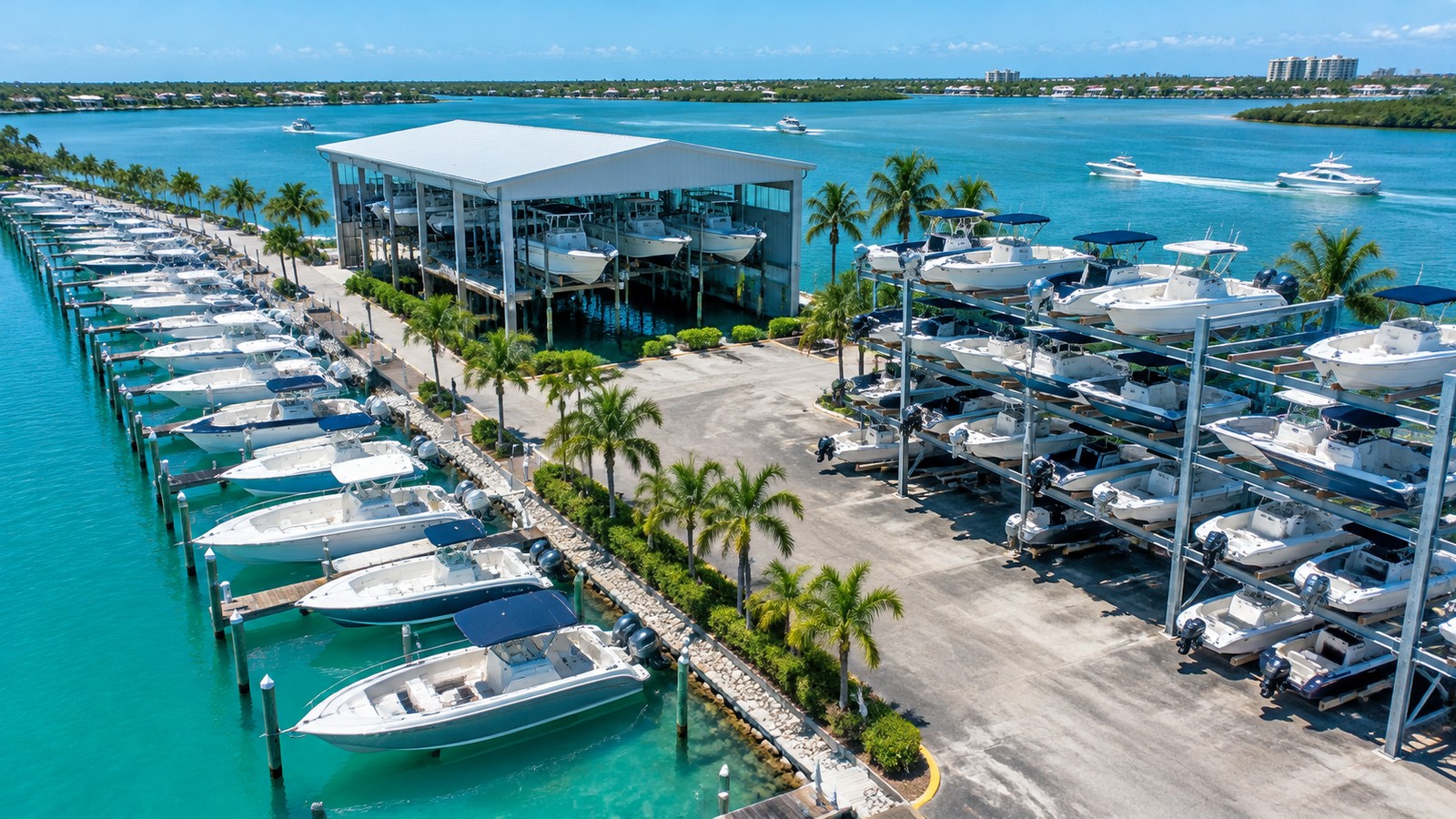
Quick answers
A wet slip keeps your boat in the water and ready to go; it suits larger boats and frequent use. Dry stack stores the boat on a rack and launches it on request, reducing bottom growth and often costing less. A lift slip combines both, holding the boat above the water in its own slip. Covered slips add sun and weather protection.
- Cost: dry stack is often cheaper and cuts bottom maintenance. Lift and covered slips cost more.
- Timing: dry stack spaces for popular sizes fill early in warm-climate markets.
- Pitfall: air draft. Towers and T-tops may not fit covered slips or racks.
Wet slips
A wet slip is the classic marina berth. The boat floats in its own slip, plugged into shore power, and you can walk aboard and leave whenever you like. Wet slips fit nearly any boat size and are the only realistic option for larger cruisers and sailboats.
The trade-off is maintenance. Boats kept in the water need bottom paint, regular hull cleaning, zinc changes and more attention to through-hulls, especially in warm saltwater markets like Florida and the Texas Gulf Coast.
| Type | Boat sizes | Maintenance | Access |
|---|---|---|---|
| Wet slip | Any size | Highest (bottom paint, cleaning) | 24/7, stay aboard |
| Dry stack | Usually up to about 35 to 40 ft | Lowest | Launch on request, set hours |
| Lift slip | Limited by lift capacity | Low | 24/7 |
| Covered slip | Limited by roof height | Medium | 24/7 |
Dry stack storage
Dry stack, or rack storage, keeps your boat on a rack inside or beside a building. You call ahead, the marina launches it with a forklift, and it is waiting at the dock when you arrive. Because the hull stays dry, you avoid most bottom growth and blistering, and many dry stack facilities include washdown after each use.
Dry stack works best for center consoles and runabouts, usually under about 35 to 40 feet, depending on the facility's forklift. Downsides include launch hours, wait times on busy weekends and no overnight stays aboard.
Lift slips and covered slips
A lift slip has a boat lift built into the slip, so the hull sits out of the water between trips while you keep 24/7 access. Lifts are common on Texas lakes and in Florida, and they are a strong middle ground for boats that are used often but sit for days between outings.
Covered slips, common on Lake Travis and other Texas lakes, protect the boat from sun and hail and keep the deck cooler. They usually cost more and can be height-limited, so check your boat's air draft, including any tower or T-top.
How to decide
Start with boat size, then frequency of use. If you boat several times a week or stay aboard overnight, a wet or lift slip makes sense. If you boat on weekends in a warm climate and want less maintenance, dry stack can win on total cost. SeasonalSlips lets you filter by slip type, so you can compare wet, covered, lift and dry stack options in your area.
Frequently asked questions
Is dry stack cheaper than a wet slip?
It often is for comparable boat sizes, and it reduces bottom-maintenance costs, but pricing varies by market.
Can I sleep on my boat in dry stack?
No. Dry stack boats are launched for day use and returned to the rack.
What size boat fits in dry stack?
Most facilities take boats up to roughly 35 to 40 feet, depending on weight, beam and forklift capacity.
Filter slips by type
Compare annual, seasonal and long-term slips, then request availability from multiple marinas in one step. Prefer a hand? Our free concierge will contact marinas for you.
Sources
Rates change often. Always confirm current pricing and terms directly with each marina.